SR&ED in advanced manufacturing
Process development, automation, new materials, scrap reduction: Canadian manufacturers do R&D every day without calling it that. It is the most under-claimed sector in the country.
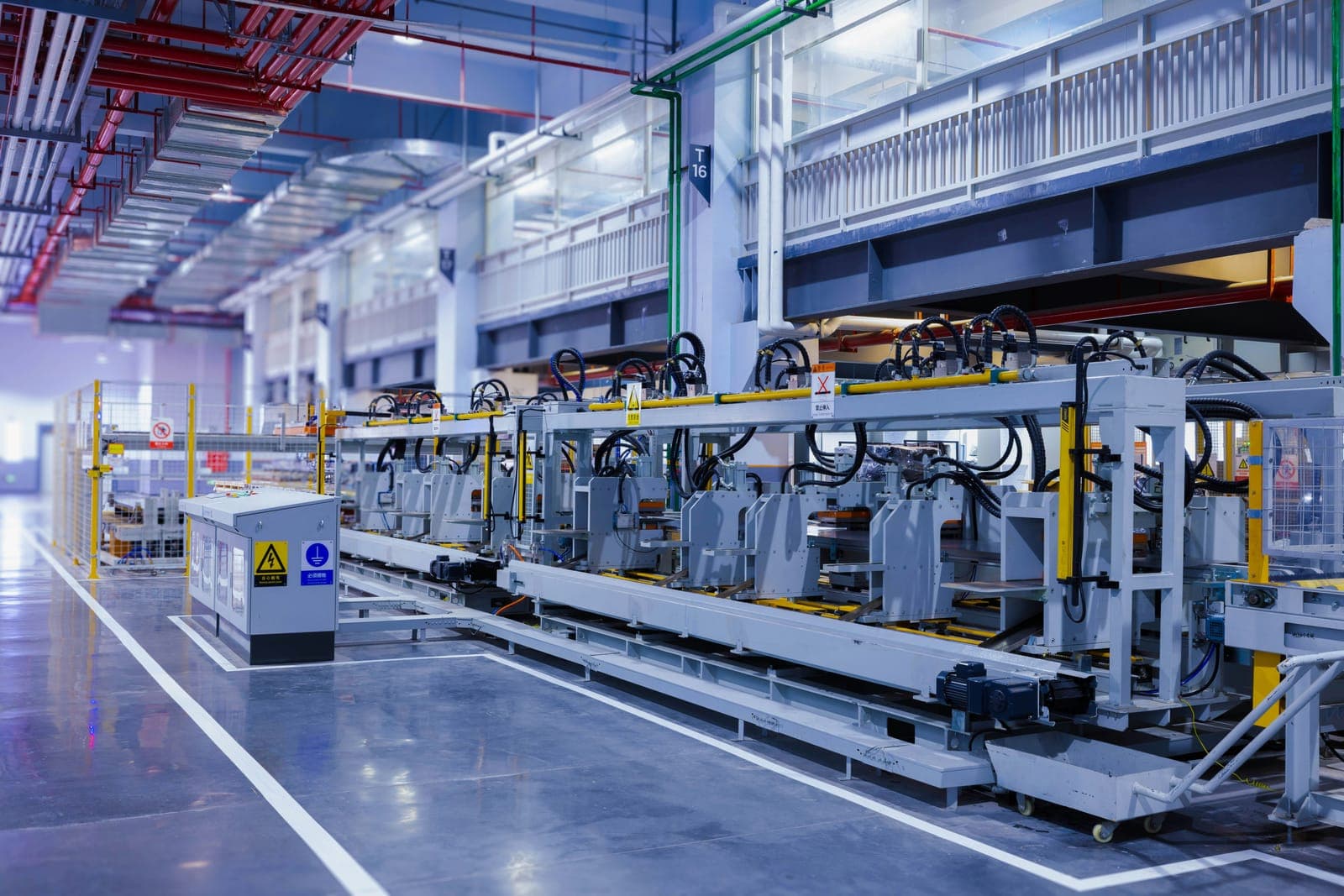
- Process development and improvement
- Automation, robotics and machine vision
- New materials and functional prototypes
SR&ED applied to manufacturing
SR&ED is Canada's federal tax credit for scientific research and experimental development. A Canadian-controlled private corporation recovers up to 35 % of its qualifying expenditures as a refundable cash payment, on a base of up to $6M per year; in Québec, the CRIC adds 30 % on the first $1M. In manufacturing the obstacle is almost never eligibility — it is that the qualifying work is done by people who do not describe themselves as researchers, and that it leaves no written trace.
- 01
Experimental development happens in production
Adjusting a recipe, reworking tooling, running a trial batch that ends up as scrap: those hours qualify when they serve to resolve a technical uncertainty. They are booked to production in nearly every accounting system, and therefore invisible at claim time.
- 02
A documented failure is worth more than a success
A rejected batch, a fixture that will not hold the cycle time, a material that behaves differently than advertised: that is the most direct evidence an uncertainty existed. Provided you wrote down what you were trying to find out before running the trial.
- 03
Automation is not always SR&ED
Installing an off-the-shelf robotic cell is engineering. Designing one because no existing configuration holds the tolerance or the cycle time is experimental development. The same expenditure falls on one side or the other depending on what you can demonstrate.
Examples of eligible projects
Work that commonly qualifies among our clients in this sector. This list illustrates; it does not enumerate. A project absent from it is not a project excluded.
Commonly qualifying in this domain
- Developing a process for a new material or a new geometry
- Reducing a scrap rate whose causes are not identified
- Designing custom tooling or a custom fixture
- Robotic cells or machine vision in difficult conditions
- Functional prototypes and trial runs
- Throughput increases limited by a poorly understood phenomenon
The sector trap: claiming an equipment purchase. A machine ordered from a catalogue, installed and commissioned according to the vendor’s procedure is not SR&ED — even when it transforms the plant. What qualifies is the development work the vendor had not anticipated.
Frequently asked questions
Yes, and it is the most common case in manufacturing. You do not need to create a new product: significantly improving a process, a material or a piece of equipment is enough, provided the result was not achievable through standard practice in the field. An improvement obtained by applying a known recipe does not qualify; one that required trials to find out how to get there does.
Yes. Salaries of technical support staff — operators, technicians, toolmakers — qualify for the portion directly engaged in the work: running trials, preparing fixtures, taking measurements. No degree is required. What matters is the nature of the work performed and your ability to establish the proportion.
You rebuild from operational traces: production reports, scrap tickets, work orders, emails, maintenance logs, PLC program versions. These are contemporaneous and dated, which is worth far more than a memo written afterwards. For the current year the better answer is to introduce a half-page trial note — it is enough, and it changes the file.
SR&ED is a tax credit: automatic once the criteria are met, claimed after the fact, with no competition and no deadline other than the filing window. Sector grants are discretionary, applied for before the work starts, and awarded by comparison between applicants. The two stack — our manufacturing sector page covers the second half.
Hubvention is a Canadian firm specialised in public R&D funding. In manufacturing our work starts on the floor: identifying, with your teams, the qualifying hours buried in production, and installing a lightweight trial record that operators will actually keep. That is what separates a defensible claim from an estimate.