Get funding for your precision
Out of the thousands of business funding programs offered to Canadian companies, agriculture is the most fragmented sector: MAPAQ works through numbered measures whose activation depends on the regional office, and two identical farms in two different regions do not have access to the same support in the same year. Knowing what is open where you are is already half the work.
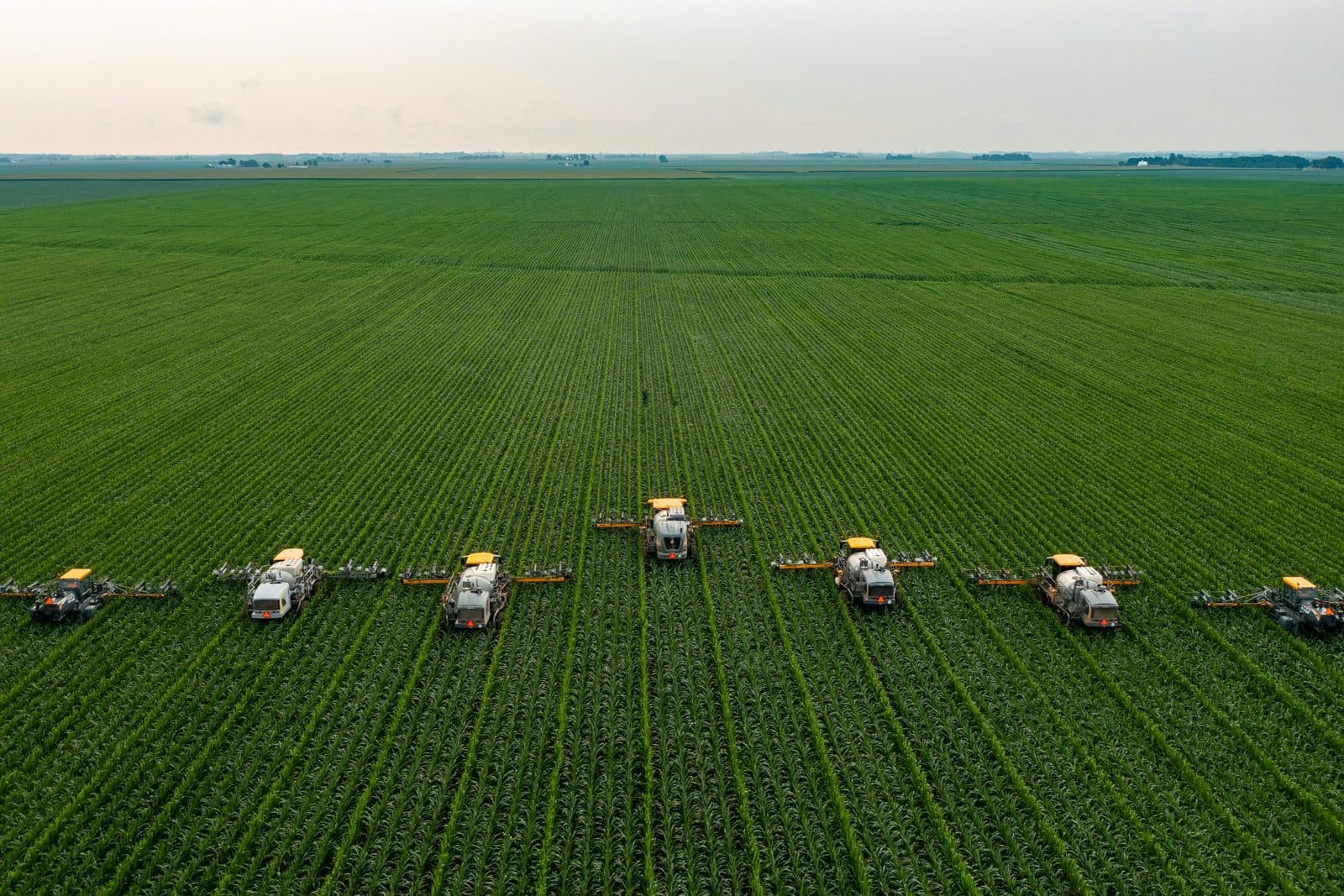
- Precision agriculture
- Guidance and variable-rate application
- Field sensors and imagery
- Robotic milking
- Automating livestock buildings
- An on-farm processing shop
- A crop protocol with no existing reference
- Business diagnostic and business plan
- Farm workforce training
- Building energy efficiency
Programs with regional availability
MAPAQ's main support program does not work as a single window but as a set of numbered measures, with distinct parameters and distinct target groups, whose activation depends on the regional office. Two identical businesses in two different regions do not have access to the same measures in the same year. That is the difficulty specific to this sector, and it is not solved by reading a web page.
- 01
On-farm processing changes which window applies
As soon as you process your own production — cheesemaking, slaughtering, packing, prepared products — you also become a food processor, and the processing programs open up, with ceilings well above those of primary production.
- 02
Precision agriculture is R&D when it is being developed
Buying a guidance system is not R&D. Developing a variable-rate model specific to your soils, calibrating sensors on a crop for which no reference exists, validating an undocumented protocol: yes. The line is whether the outcome was uncertain, not which technology was used.
- 03
Farm equipment rarely qualifies for C3i
The equipment tax credit targets manufacturing and processing, not primary production. A tractor does not qualify; the equipment in your processing shop does. It is one of the most frequent confusions in the sector, and it is settled by separating the two activities in the books.
Funding programs for this sector
A selection, not an inventory: the programs we routinely build in this sector. Amounts, agencies and statuses are read from our program sheets — they follow the official source.
- Provincial · Ministère de l'Agriculture, des Pêcheries et de l'Alimentation du Québec (MAPAQ)
PADAAR
MAPAQ's support program, organized into numbered measures: innovation, training, diagnostic, business development. Which measures are active depends on your regional office.When to pull it out As a first reflex, checking with your regional office which measures are open this year.Continuous intakeVaries by measure — up to $50,000 - Federal · Agriculture and Agri-Food Canada
Agri-innover
The federal stream from Agriculture and Agri-Food Canada, for bringing an innovative product, process or technology to market — on a scale well above the Quebec measures.When to pull it out When the project goes beyond improving your operation and puts something new on the market.Continuous intakeUp to $5,000,000 - Provincial · Ministère de l'Agriculture, des Pêcheries et de l'Alimentation du Québec (MAPAQ)
PTA stream 2
The food processing program, which opens as soon as you process your own production: equipment, capacity, shop automation.When to pull it out As soon as part of your production is processed on site rather than sold raw.OpenUp to $150,000 - Federal · National Research Council of Canada
NRC IRAP
Continuous intakeUnder $50,000 to $10M - Provincial · Revenu Québec
C3i
Continuous intake15% to 25% of the cost of the assets - Provincial · Aliments du Québec, supported by MAPAQ
SIAM
Closed$10,000 to $100,000 - Provincial · Services Québec — Ministère de l'Emploi et de la Solidarité sociale
MFOR
Continuous intakeUp to 50% of training costs - Provincial · Groupe Export agroalimentaire Québec-Canada, with financial support from MAPAQ
SEB
ClosedUp to $100,000 - Municipal · Ville de Québec — Service du développement économique et des grands projets
Support vouchers
The Ville de Québec support vouchers fund specialized professional consulting services, used to address a company's strategic issues at different stages of its development. The contribution is non-repayable and reaches $30,000 per company per year, up to a maximum of 30% of eligible expenses. Professional fees, consulting services and studies are the only expenses covered.Continuous intakeUp to $30,000 per year
Each sheet carries its last verification date and the link to the official source. Tax credits — SR&ED first among them — add to this list and stack on separate pools of expenses.
Funded expenses and refused expenses
The expenses usually accepted and refused in this sector. Check the refusals first.
Typically funded
- Precision agriculture equipment: guidance, variable-rate application, sensors, imagery
- Automating livestock buildings and robotic milking
- Equipping an on-farm processing shop
- Developing a crop or livestock protocol with no existing reference
- Business diagnostic, business plan and advisory support
- Training and skills development for the farm workforce
Typically refused
- Buying farmland and production quota
- Routine inputs: seed, fertilizer, feed, fuel
- Like-for-like replacement of end-of-life equipment
- Regular operating charges and financing costs
- A measure of the support program not activated in your region for the current year
For a specific expense, a ten-minute call is enough to confirm whether it qualifies.
How we support your sector
The criteria are online, and so are the forms. What is not: the filing order that keeps one grant from reducing another, the wording that lines your project up with the program's objective, and the documentation that holds up if the agency comes back with questions two years later.
- 01
From assessing the project to money in the bank
We start by assessing what your project can realistically go after — and we tell you if the answer is “nothing significant.” We then build the file, technical section included. Then we handle the exchanges with the agency through to the payment of funds.
- 02
The full build, without tying up your teams
We run the technical interviews, write the file, put together the funding plan and handle the exchanges with the agency. Your people go back to production.
- 03
Defence is included, not billed as an extra
If the agency or the tax authority asks for clarification, Hubvention Shield™ covers the response and the documentation. 99% of our files go through.
Questions about funding in this sector
Phrased the way they reach us, not the way the administration titles them. The amounts and rates quoted point back to the program sheets, each of which carries its official source and verification date.
Ask yoursThree main sources. MAPAQ, through its support program organized into numbered measures, funds innovation, training, business diagnostics and development — but not every measure is active everywhere, nor every year. Agriculture and Agri-Food Canada funds the commercialization of innovations federally, on a much larger scale. And as soon as there is processing of the production, the food processing programs open up, with ceilings well above those of primary production. The first useful step is to check with your regional MAPAQ office which measures are open this year.
Because MAPAQ's main support program is not a single window: it is a set of distinct measures, with their own parameters and their own target groups, whose activation depends on the regional office. Two comparable businesses in two different regions do not have access to the same measures in the same year, and a measure open last year may not be this year. No web page publishes the complete, up-to-date state of the scheme — that is the peculiarity of the sector, and it is settled by a phone call, not a search.
It can be, depending on which measures are active in your region and on the nature of the project. Watch the tax credit, though: C3i targets manufacturing and processing equipment, not primary production. Equipment assigned to agricultural production generally does not qualify, whereas equipment in an on-farm processing shop does. The distinction turns on the activity the asset is assigned to — which assumes the two activities are separated in your books.
Yes, when it carries out work with an uncertain outcome, which is more frequent than people think. Developing a crop protocol for a variety or a soil with no available reference, developing a variable-rate model specific to your operation, validating an undocumented storage method or livestock process: those are eligible activities. Buying and using an existing technology according to the supplier's recommendations is not. The line is whether the outcome was uncertain, and the proof lies in dated trial records — including those of the seasons that did not give the expected result.
Yes, and it is the most profitable change of status in the sector. As soon as part of your production is processed on site — cheesemaking, slaughtering, packing, prepared products — you also fall under the food processing programs, whose ceilings are well above those of primary production. The shop equipment can then qualify for the tax credit on processing equipment, and the product development work for SR&ED. That still requires the two activities to be separated in the accounts.
Yes, subject to the total public support ceiling, which is calculated across all sources — provincial, federal and municipal together. That ceiling is assessed while the package is being built, not afterwards: a second grant obtained later can push you over the threshold and trigger a reduction, or even repayment of the first. This is why the complete financing package should be presented with the first application, listing the support sought elsewhere, rather than filing each application in isolation.
No single list gives it, and in agriculture a list tells you less than elsewhere. There are thousands of business funding programs in Canada, spread across the federal government, the provinces, municipalities and sector bodies. This sector adds a difficulty of its own: part of the support is activated region by region, so a web page describing a program does not tell you whether it is open where you are this year. The information that settles it comes from the relevant regional office, at the time of the project — that is a check to make, not a page to read.
If your business spans several sectors, each one gives access to its own programs. See also: food processing, wood and forestry and manufacturing.